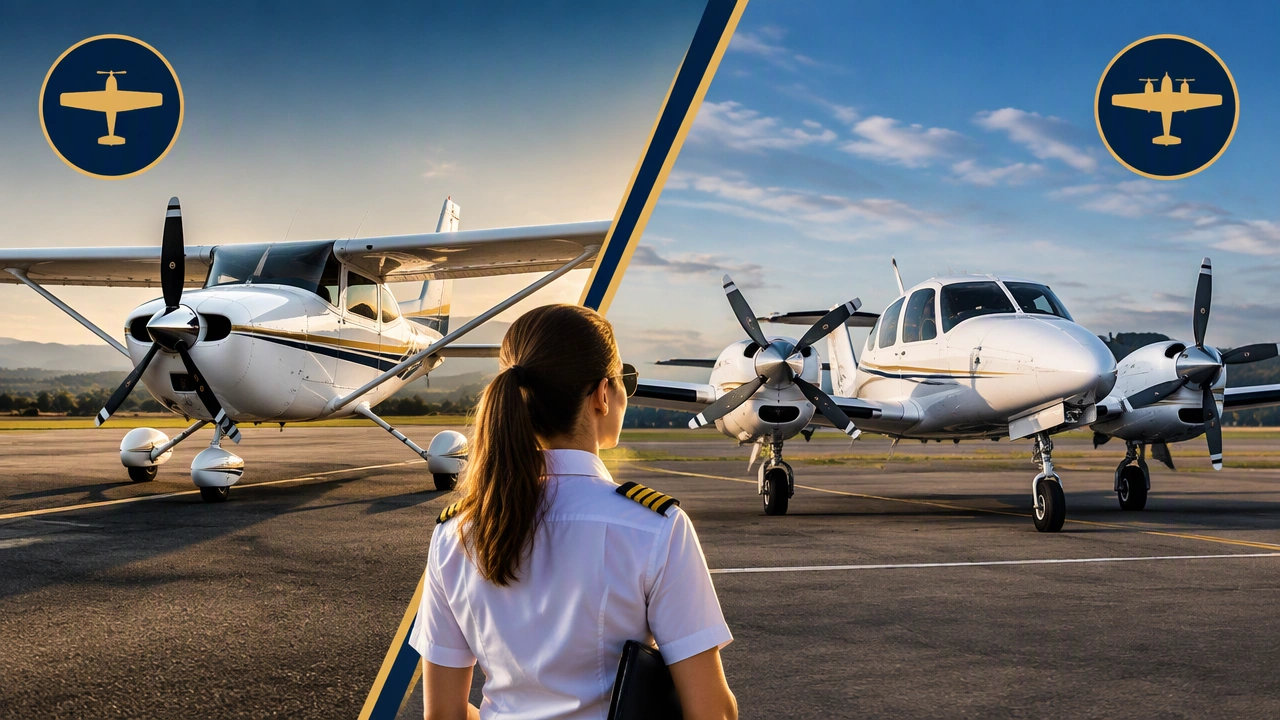
Single-Engine vs Multi-Engine Aircraft: Performance, Training, and Cost
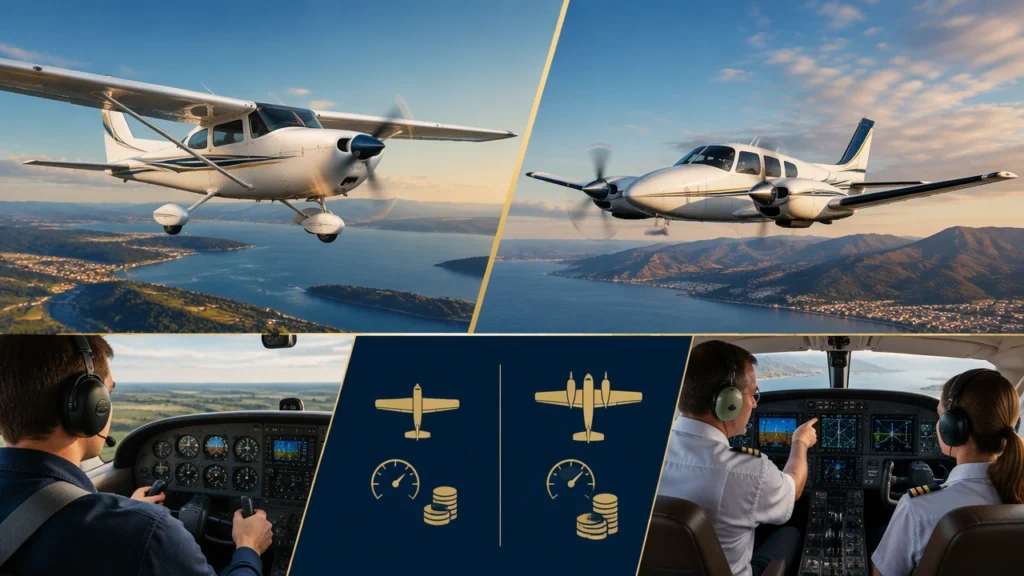
Choosing the right training path in pilot training starts with understanding the difference between single engine and multi engine aircraft. Both categories can carry pilots safely, but they behave differently when power is available, when power is lost, and when weather or workload increases. This guide compares their performance, training requirements, and realistic costs so students and aspiring pilots can make informed decisions.
What defines each category
A single-engine airplane has one powerplant driving one propeller. Most primary training aircraft, such as common two-seat and four-seat trainers, fall into this category. The design is relatively simple: one fuel system, one set of engine instruments, and one power source to manage.
A multi-engine airplane has two or more engines, usually mounted on each wing. Examples range from light twins used for advanced training to larger turboprops and jets. The extra engine adds redundancy, but it also adds systems complexity. Pilots must monitor two engines, understand asymmetric thrust, and manage failures that do not exist in a single-engine airplane.
Performance differences
With two engines, a multi-engine aircraft generally offers higher cruise speed, greater climb performance, and more useful load. It can also continue flying if one engine fails, provided the remaining engine can sustain altitude and the pilot responds correctly. That capability is the main operational advantage of twins.
Single-engine aircraft usually have lower fuel burn, simpler maintenance, and more forgiving handling for new pilots. Their performance is limited by one engine, so pilots must plan carefully around weather, density altitude, and terrain. A single-engine airplane may be perfectly capable for local flights, cross-country trips, and training, but it has less performance margin when conditions become demanding.
Multi-engine performance has an important qualification: with one engine inoperative, the airplane may not climb or cruise as well as expected. Asymmetric thrust creates yaw, and the pilot must maintain control while identifying the failed engine, reducing drag, and restoring balanced thrust. This is why multi-engine training emphasizes procedures and decision-making as much as raw aircraft performance.
Training requirements
Single-engine training
Most pilots begin with a private pilot certificate earned in a single-engine airplane. Training covers aircraft systems, normal and emergency operations, navigation, weather, aerodynamics, and flight planning. Students learn takeoffs, landings, stalls, steep turns, and go-arounds while building basic judgment.
Single-engine training is structured around one powerplant. Emergency practice focuses on engine failure, forced landings, and energy management. The workload is demanding but comparatively straightforward because there is no second engine to monitor or asymmetric thrust to correct.
Multi-engine training
Multi-engine training is an advanced step. Before entering a multi-engine program, pilots usually need a solid foundation in basic aircraft control, navigation, and instrument skills. Training introduces the multi-engine rating, which allows a pilot to act as pilot in command of a multi-engine airplane when the appropriate class and privileges apply.
Lessons focus on engine management, critical engine concepts, asymmetric flight, engine failure after takeoff, and rapid response to abnormal conditions. Students practice identifying the operating engine, maintaining control, and completing checklists under pressure. Many programs also include instrument work because weather and low visibility can magnify the consequences of a mistake.
The multi-engine rating is not a separate certificate; it is an added category of privilege on a pilot certificate. Requirements include ground instruction, flight training, and a practical test. Exact experience and training requirements depend on the training provider and the aircraft used, so candidates should review current official guidance before enrolling.
Safety and risk management
Both categories can be safe when operated within their limits. A single-engine airplane has one engine, but modern maintenance, inspection, and pilot preparation reduce risk significantly. Pilots learn to avoid situations where an engine failure would leave few options, such as flying over unsuitable terrain in poor weather.
Multi-engine aircraft provide redundancy, but redundancy only helps when the pilot can manage the failure. An uncorrected engine problem, a wrong engine shutdown, or delayed recognition can create a serious emergency. Training therefore stresses disciplined checklist use, clear communication, and calm decision-making.
Cost comparison
Single-engine training is usually less expensive. The aircraft are simpler to operate, fuel consumption is lower, and maintenance is less complex. Students can build hours at a manageable cost while developing core skills.
Multi-engine training costs more because fuel use is higher, rental rates are greater, and maintenance involves two engines and additional systems. Training also requires more ground study and flight time to reach proficiency. The investment can be worthwhile for pilots pursuing airline careers, corporate aviation, or operations where twin-engine capability is valuable.
Which path should you choose?
Begin with a single-engine airplane if you are starting from zero experience. It provides the strongest foundation in aeronautical decision-making, aircraft control, and basic navigation. Add multi-engine training when your skills are stable and your goals justify the expense.
If your objective is airline or corporate flying, plan for the multi-engine rating early in your career path. If you want personal travel, flight instruction, or recreational flying, a single-engine aircraft may meet your needs with lower cost and simpler ownership.
The key is to match training to your goals, budget, and readiness. Understand the difference between single engine and multi engine aircraft, build sound habits in one category, and progress when the next step adds real value to your flying.