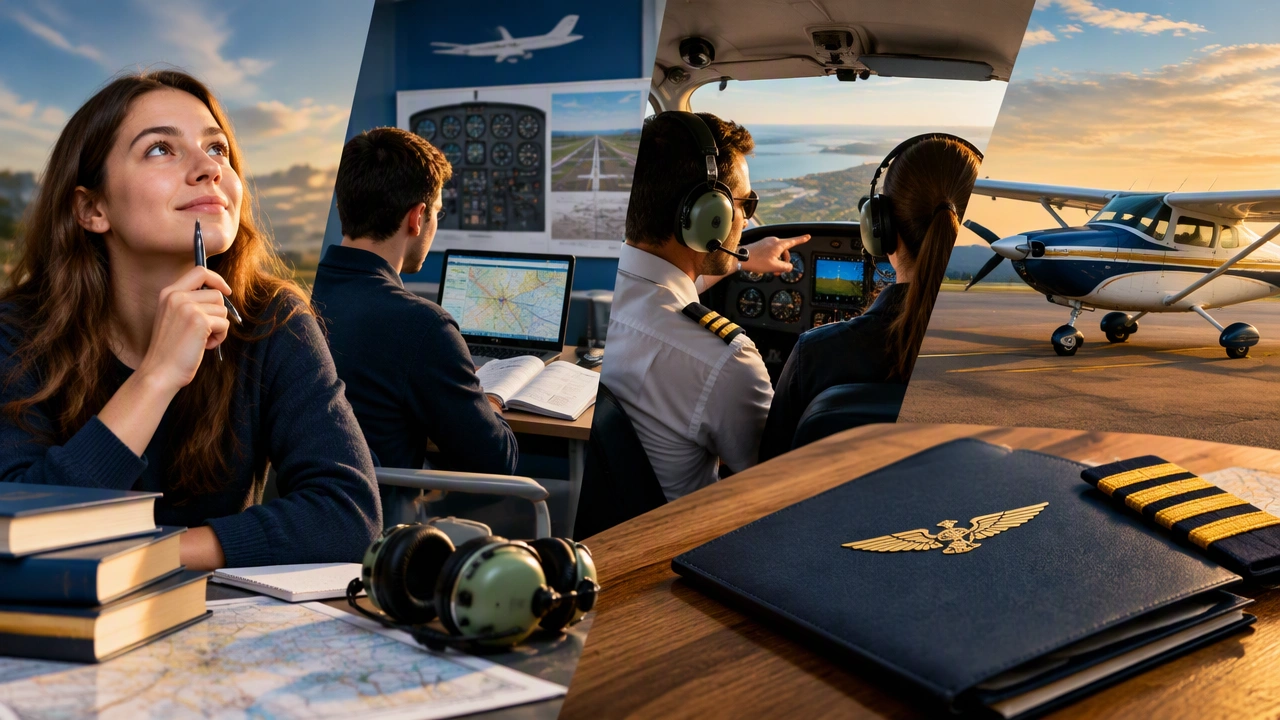
Complete Guide to Pilot Training: From First Question to First Certificate

Pilot training is a structured process that takes a curious beginner and builds the knowledge, judgment, and stick-and-rudder skill needed to fly safely. If you have ever wondered how to start pilot training as a complete beginner, this guide walks you through the full journey, from early research to the day you earn your first certificate.
Understand what a first pilot certificate involves
In the United States, the most common starting point is the Private Pilot Certificate, often called the private pilot license. It allows you to act as pilot in command for noncommercial flights, typically with family or friends. Other countries use similar levels, though the exact name and rules differ. Knowing the end goal helps you plan the steps that come before it.
Key privileges and limits to understand early:
- You can fly for personal or business travel, but you cannot carry passengers or cargo for hire.
- You must fly under visual flight rules unless you hold an instrument rating.
- You need appropriate endorsements and currency to carry passengers.
Check eligibility and medical requirements
Before you invest significant time and money, verify that you meet basic eligibility. In the United States, you must be at least 16 to solo and 17 to earn a private pilot certificate. You will need to read, speak, write, and understand English. A foreign applicant should check specific country rules and any additional language or documentation requirements.
Schedule an aviation medical exam early. For private pilot privileges, a third-class medical is the minimum. The exam checks vision, hearing, blood pressure, and general health. If a condition is flagged, you can often resolve questions before you start training, which saves time and money. Some pilots also use BasicMed after meeting certain criteria, but a medical certificate is still the most straightforward path for beginners.
Choose your training path
There are three common training paths, each with trade-offs.
- Part 61 flight school: Flexible scheduling, local instructors, and a personalized pace. Good if you have limited availability or want to train close to home.
- Part 141 approved program: A structured syllabus with defined stage checks. Can reduce required flight hours if you meet specific requirements, and may fit students who prefer a classroom-like progression.
- University or college program: Combines academics with flight training. Can be efficient if you also want a degree, but often requires a larger time and financial commitment.
When choosing a school, evaluate aircraft maintenance, instructor turnover, scheduling reliability, and total cost ranges. Ask for a sample syllabus and a clear estimate of hours and expenses.
Ground knowledge and the FAA knowledge test
Flight training has two halves: flying the airplane and understanding the science and regulations behind it. Ground study covers aerodynamics, aircraft systems, weather, navigation, airspace, regulations, and decision-making. You can study through formal ground school classes, structured online courses, or self-study with approved materials.
Most applicants take the FAA knowledge test before the checkride. A strong score reflects solid understanding, not just test memorization. Aim to connect each topic to real flying, such as how density altitude affects takeoff performance or how weather reports influence a cross-country plan.
Begin flight lessons and earn your student pilot certificate
Your first lessons focus on aircraft control, safety procedures, and airport operations. Early maneuvers include straight-and-level flight, turns, climbs, descents, slow flight, and stalls. You will practice radio communication, checklists, and emergency procedures.
You will apply for a student pilot certificate through the FAA’s IACRA system. Your instructor will verify your identity and help complete the application. This certificate is required before you can solo.
First solo and solo practice
Solo flight is a major milestone. Your instructor will endorse you when you demonstrate consistent proficiency and sound judgment. A first solo typically includes takeoffs and landings at your home airport. After solo, you will practice maneuvers, traffic pattern work, and local cross-country flights to build confidence and skill.
Cross-country training and instrument basics
For a private pilot certificate, you must complete specific solo and dual cross-country flights, including a long solo cross-country with multiple stops. You will plan routes, compute time and fuel, select altitudes, and manage navigation using pilotage, dead reckoning, and GPS.
Even if you are not pursuing an instrument rating yet, you will learn basic instrument skills. This training helps you handle unexpected weather or visibility changes and builds overall safety margins.
Build required experience and proficiency
The FAA sets minimum hours, but real readiness comes from demonstrated proficiency. Typical private pilot training takes 40 to 70 hours, depending on frequency, aptitude, and local flying conditions. Regular practice accelerates progress, while long gaps between lessons slow it down.
Focus on these areas throughout training:
- Aeronautical decision-making: Evaluate risks, set personal minimums, and use checklists every flight.
- Systems knowledge: Understand engine instruments, fuel management, and electrical systems.
- Weather judgment: Learn to interpret METARs, TAFs, winds aloft, and radar.
- Navigation accuracy: Verify position frequently and manage time and fuel carefully.
Prepare for the checkride
The practical test, or checkride, has an oral portion and a flight portion. The oral covers regulations, airspace, weather, systems, performance, and your personal decision-making. The flight evaluates maneuvers, navigation, emergency procedures, and overall airmanship.
Preparation steps:
- Review the Airman Certification Standards and make sure you can explain and demonstrate each task.
- Organize your logbook, endorsements, and required documents.
- Complete a mock checkride with your instructor to identify weak areas.
- Study the aircraft’s POH or AFM, especially performance charts and limitations.
After you earn your private certificate
Your certificate is a license to learn. Build experience with short local flights, then expand to longer trips. Consider adding an instrument rating to fly in clouds and low visibility. Many pilots also pursue a commercial certificate or multi-engine rating later, depending on their goals.
A practical timeline and budget mindset
A realistic plan helps you stay on track. Aim to fly at least two to three times per week during active training. Longer gaps increase review time and total cost. Budget for aircraft rental, instructor time, fuel, exam fees, headsets, study materials, and medical expenses. Build a small reserve for unexpected weather delays or additional review flights.
Final thoughts
Learning to fly is a step-by-step process. Start with research and a medical exam, choose a school and instructor, build ground knowledge, earn your student pilot certificate, solo, complete cross-country training, and prepare thoroughly for the checkride. With a clear plan, steady practice, and patient focus on safety, pilot training becomes a rewarding journey from first question to first certificate.