
Common Student Pilot Mistakes and How to Avoid Them: Practical Fixes for Training and Weather-and-Safety Awareness
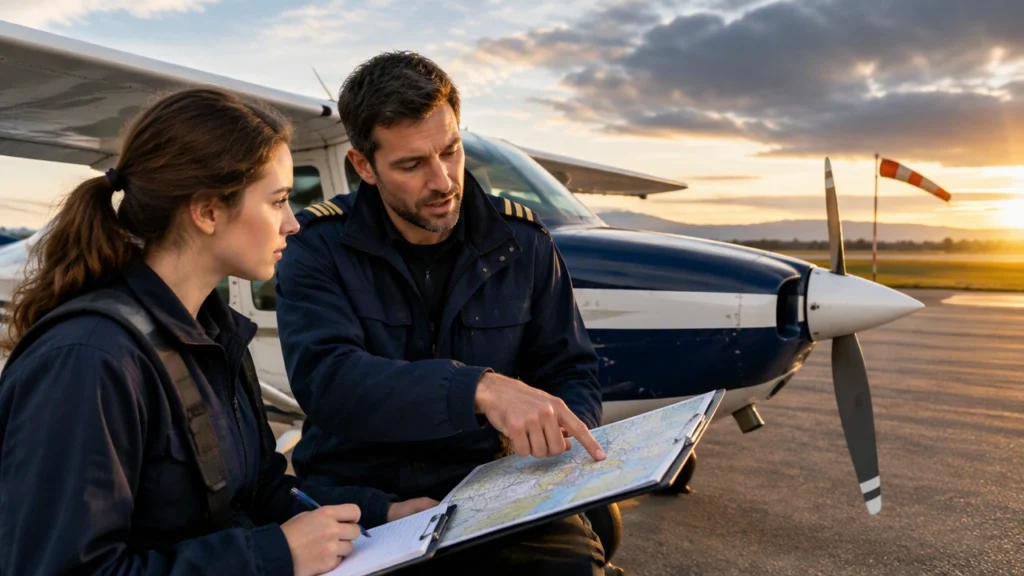
Pilot training builds skill, judgment, and confidence at the same time. Early in that process, most learners repeat a few predictable errors that are easy to prevent with better preparation, steadier habits, and clearer decision-making. This article focuses on the common mistakes student pilots make and how to fix them, both in the air and on the ground, so you can progress faster with fewer surprises.
Why students repeat the same errors
Most training mistakes are not caused by a lack of talent. They come from workload, stress, incomplete checklists, or rushing. When you add weather, navigation, and traffic, small lapses grow into bigger risks. The best antidote is a calm, structured approach: brief the flight, use your checklists every time, and debrief honestly.
On the ground: preparation mistakes that affect every flight
Sloppy preflight planning
Skipping a full briefing or guessing at fuel, weight, and balance is a frequent trap. Always compute load, confirm CG, and set fuel planning with a safe reserve. Before you fly, brief the route, altitudes, frequencies, and emergency options. Write down key frequencies and set avionics in advance to reduce cockpit workload.
Weak weather evaluation
Students often look at one model or one snapshot and decide to go. Build a habit of checking trends: current observations, METARs and TAFs, winds aloft, radar, satellite, and NOTAMs. Ask yourself three questions: is the weather within my personal minimums, is it improving or deteriorating, and what is my plan B if it changes en route. When in doubt, delay or cancel.
Rushing the preflight inspection
Walk around with a purpose, not a routine. Check control surfaces, fuel quantity and quality, tires, drains, and cowling. Look for anything loose or missing. If something does not feel right, stop and ask. Catching a small issue on the ground is always better than discovering it in the air.
In the cockpit: handling and workload errors
Poor trim and airspeed control
Fighting the airplane leads to fatigue and sloppy maneuvers. Trim early and often. Set climb, cruise, and approach speeds, then make small corrections. Stable speed means stable pitch and easier turns, approaches, and go-arounds.
Fixating inside
Staring at instruments or the GPS while ignoring the horizon is a common habit. Use a scan that starts outside, then cross-check inside. Outside reference keeps you straight and helps with traffic avoidance, while instruments confirm what you feel.
Not using checklists every time
Memory is helpful, but checklists are safer. Use a flow first, then verify with the checklist. Before takeoff, in the run-up, and on approach, the checklist protects you from the small steps that matter most.
Ignoring the go-around
Many unstable approaches continue because students feel committed. Make the go-around decision early. Add power, pitch for a safe attitude, clean up the airplane, and climb. A go-around is a normal training event, not a failure.
Weather and safety judgment
Flying into conditions beyond your minimums
Set personal minimums early in training, such as crosswind limits, ceiling, visibility, and turbulence thresholds. If the weather is near your limit, choose the safer option. Use standard decision points on the route where you will turn back if conditions are not as expected.
Forgetting to check NOTAMs and airspace
Temporary flight restrictions, runway closures, and special procedures can change your plan. Review NOTAMs and airspace before departure and again if the flight is long. Confirm runway lengths, lighting, and any noise or traffic procedures.
Overlooking fatigue and stress
Fatigue degrades judgment the same way weather does. If you did not sleep well, feel rushed, or are fighting a cold, adjust your plan. Training benefits from consistency, not heroics.
Communication and cockpit management
Unreadable or hesitant radio calls
Practice standard phraseology and keep calls short. Write down clearances and read them back. If you are unsure, ask for clarification. Good communication lowers workload and reduces mistakes.
Distractions during critical phases
During taxi, takeoff, and landing, keep nonessential tasks for later. If a distraction occurs, verbalize it: “Distraction, I will continue the checklist after stabilizing.” This simple call resets your focus.
Landings and traffic pattern habits
Rushing the base-to-final turn
Wide, stable patterns give you time to think. Avoid sharp, low turns to final. If the approach is unstable, go around. Speed control and a steady descent rate solve most landing problems before they start.
Flat or flare timing errors
Look to the end of the runway during the flare and hold the picture. Add small power adjustments if needed and avoid forcing the airplane down. Landings improve with repetition, patience, and consistent speeds.
Navigation and situational awareness
Over-reliance on GPS
GPS is a great tool, but keep your pilotage and dead reckoning skills sharp. Cross-check ground track, time, and landmarks. If the signal drops or the route changes, you should still know where you are.
Failing to set altimeter and transponder
Before departure and when handed off, set the altimeter and confirm the transponder code and mode. Small setting errors can create altitude separation issues and ATC confusion.
How to fix mistakes with better training habits
- Brief every flight: route, weather, risks, personal minimums, and emergency options.
- Use a stabilized approach checklist on every landing and commit to the go-around if unstable.
- Set personal weather minimums early and review them before each flight.
- Build a habit pattern: aviate, navigate, communicate, in that order.
- Debrief after each lesson: what worked, what did not, and one change for next time.
- Keep learning on the ground: review procedures, weather theory, and airspace regularly.
A simple weekly plan
Each week, pick one skill to sharpen, such as trim control, radio calls, or weather analysis. Practice it on the ground and in the sim if available, then reinforce it in the air. Small, focused improvements add up quickly.
Final thoughts
Every student pilot makes mistakes; the goal is to catch them early, fix the root cause, and prevent repetition. With steady preparation, disciplined checklists, and conservative weather decisions, you will build the habits that keep training safe and enjoyable. Use the list above to review the common mistakes student pilots make and how to fix them, and turn each lesson into progress you can feel.