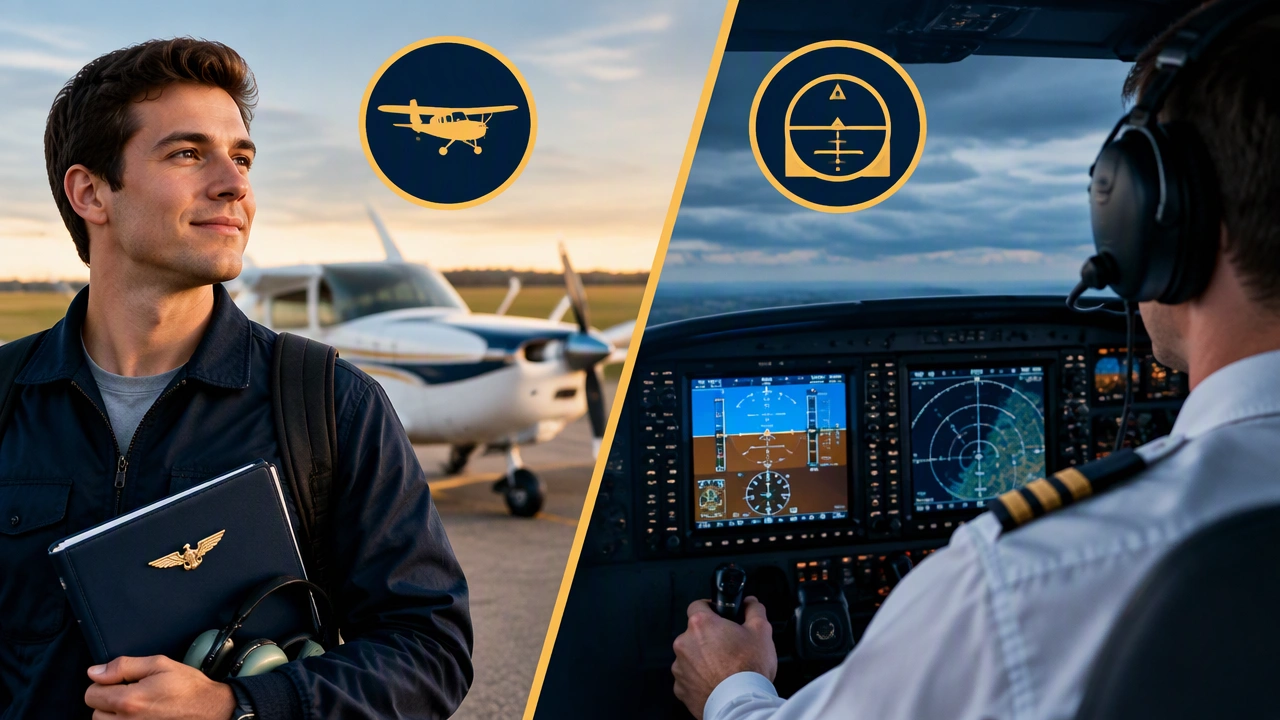
Private Pilot Certificate vs Instrument Rating: A Clear Comparison for New Pilots
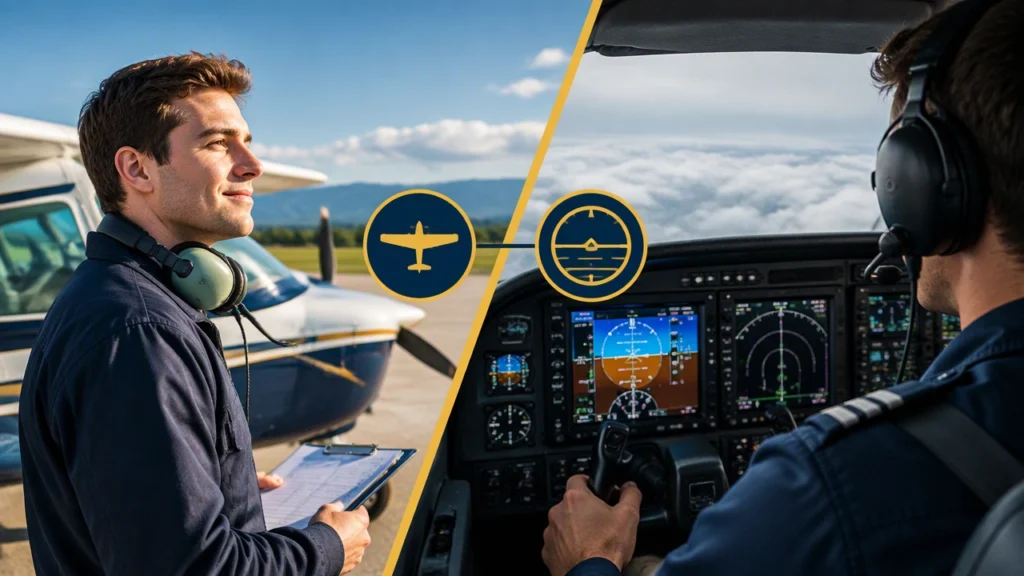
Pilot training opens a world of personal travel, professional opportunity, and deeper knowledge of weather, navigation, and decision making. Two milestones often discussed early are the private pilot certificate and the instrument rating. Understanding the difference between private pilot license and instrument rating helps you plan training, set realistic goals, and fly more safely.
This article explains what each credential allows, how the training differs, and how they fit together. It is written for people beginning or considering pilot training, but it also helps licensed pilots who are deciding whether to add an instrument rating next.
What a Private Pilot Certificate Allows You to Do
A private pilot certificate is the foundational license for most pilots. It allows you to act as pilot in command of an aircraft carrying passengers and luggage, for noncommercial purposes. You can fly during the day, and at night if you meet the applicable requirements and your medical certificate is current. You can fly within the United States and, with proper preparation, into adjacent countries under general aviation procedures.
With a private pilot certificate, you may not be compensated for flying. You can share expenses with your passengers on a pro rata basis under certain rules, but you cannot act as a paid pilot for hire. You can use the aircraft for business travel, personal trips, and building experience, but the flight itself cannot be a commercial service.
Operationally, a private pilot is generally limited to visual flight rules unless additional training and endorsements are obtained. In practical terms, this means you are expected to navigate and avoid clouds and low visibility by looking outside. You can use instruments to support your flying, but you are not yet rated to fly into clouds or rely solely on instruments when visibility is poor.
What an Instrument Rating Allows You to Do
An instrument rating adds privileges to your existing pilot certificate. It allows you to fly under instrument flight rules, or IFR, when authorized. With an instrument rating, you can fly in clouds, in reduced visibility, and in many complex weather environments while relying on your instruments and air traffic control procedures. You can file IFR flight plans, receive clearances, fly instrument approaches, and operate with greater flexibility in the national airspace system.
The rating does not change the commercial limitations of a private pilot certificate. It expands where and when you can fly, not whether you can be paid. If you hold a private pilot certificate with an instrument rating, you are still limited to noncommercial operations. If you later earn a commercial pilot certificate, the instrument rating becomes even more valuable, because commercial operations often depend on reliable IFR access.
In day to day flying, an instrument rating gives you more options. You can depart when weather is below visual flight rules minimums, continue toward your destination when clouds descend, and fly precision or nonprecision approaches to land at airports with instrument procedures. It also strengthens decision making, because instrument training emphasizes planning, risk assessment, and disciplined adherence to procedures.
Training Differences
Private pilot training focuses on aircraft control, navigation by visual references, basic weather understanding, radio communication, and airmanship. You learn to take off, maneuver, navigate, and land safely, and you practice emergency procedures. The goal is confident, safe flight in visual conditions.
Instrument rating training builds on those skills and adds precision instrument flying, instrument navigation, instrument approaches, missed approach procedures, and crew resource management techniques even when flying single pilot. You learn to trust and cross check the instruments, interpret instrument departures and arrivals, and manage flight in low visibility. Training often includes simulator time, instrument ground school, and extensive practice under the hood or in actual instrument conditions with a qualified instructor.
From a requirements perspective, the private certificate requires a set number of flight hours, knowledge tests, and a practical exam. The instrument rating requires additional instrument hours, an instrument knowledge test, and a separate practical exam focused on instrument procedures. Exact numbers vary by training path and regulatory updates, so check current regulations and your instructor’s guidance.
Weather and Decision Making
Weather knowledge is important at every stage of pilot training. For private pilots, the emphasis is on recognizing conditions that support safe visual flight and avoiding conditions that do not. For instrument rated pilots, the emphasis expands to interpreting weather reports and forecasts, planning around icing, turbulence, and low ceilings, and making go or no go decisions under IFR.
Instrument training improves weather discipline. It teaches you to plan alternatives, understand minimums, and execute approaches with precision. Even on days when you could fly visually, an instrument rated pilot often chooses IFR to benefit from structured routing and clearer separation from traffic and terrain.
Cost, Time, and Priorities
The private certificate is typically completed first because it provides the core skills and privileges needed to fly. It is generally less expensive and requires fewer total hours than an instrument rating. The instrument rating often follows and adds depth, capability, and safety margins. Many pilots pursue the rating soon after their private certificate to preserve momentum and maintain instrument proficiency.
Training time depends on your schedule, weather, aircraft availability, and personal learning pace. Some pilots complete the private certificate in several months, then add the instrument rating over the following months. Others spread training over a longer period. Consistent practice and solid ground knowledge reduce total time and cost.
How the Two Credentials Work Together
Think of the private certificate as your license to fly and the instrument rating as a major upgrade to your capability. The private certificate gets you into the sky. The instrument rating lets you keep going when the sky gets less friendly. Together, they prepare you for more reliable travel, better risk management, and smoother progress if you choose advanced training later.
For travelers and aspiring professionals, this combination is powerful. You can plan trips with greater confidence, meet schedules more reliably, and fly in a wider range of conditions while staying within the rules. If your goal is airline or corporate flying, the path often includes private, instrument, commercial, and eventually the airline transport pilot certificate, but the instrument rating remains a cornerstone throughout.
Choosing Your Next Step
If you are starting from zero, begin with the private certificate. Build strong fundamentals, enjoy flying in visual conditions, and learn the rhythm of planning and decision making. Once you are comfortable and proficient, add the instrument rating to expand your capabilities and safety.
If you already hold a private certificate, consider the instrument rating next. It is one of the most valuable upgrades a pilot can make. It sharpens skills, improves access to more airports and routes, and helps you fly with greater assurance in a broader range of weather.
Whichever step you are on, talk with a qualified instructor about your goals, budget, and timeline. Good pilot training is a series of well planned milestones, and understanding the difference between private pilot license and instrument rating helps you choose the right one at the right time.