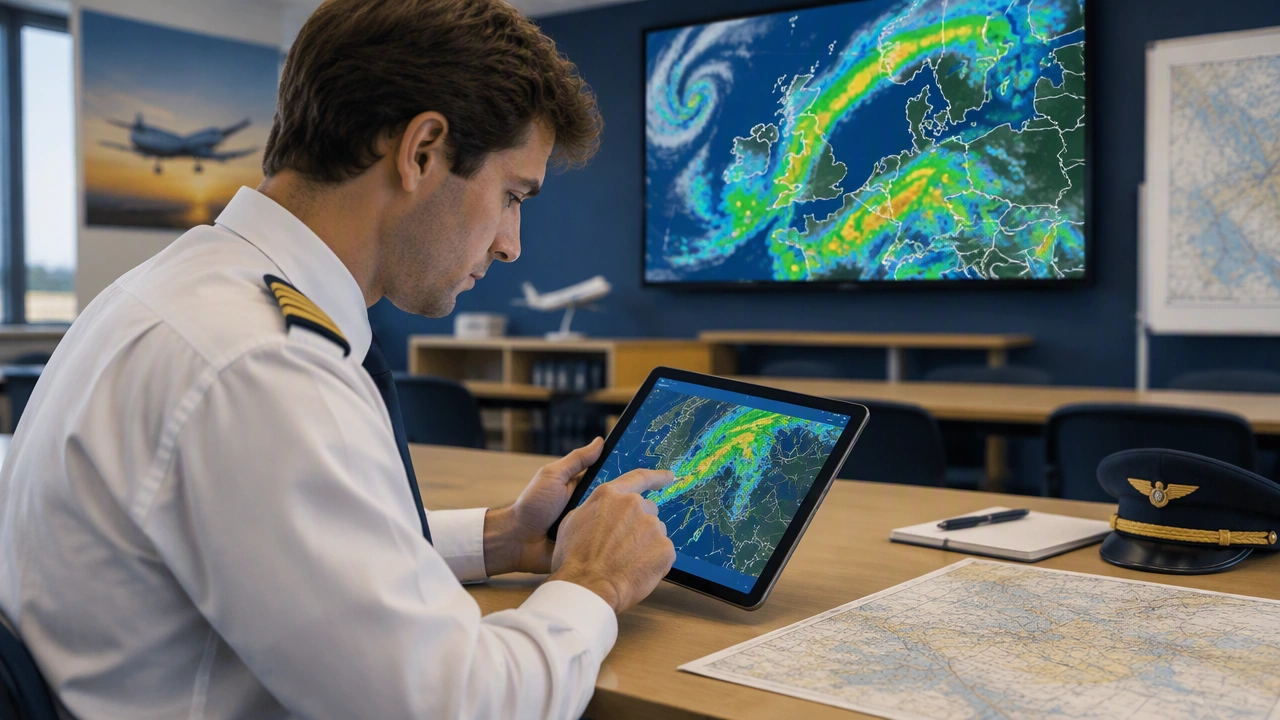
Weather interpretation is a skill that separates safe pilots from reckless ones. METARs give you current conditions at the airport while TAFs provide terminal forecasts. Start by learning the basic format — station identifier, date and time, wind direction and speed, visibility, cloud layers, temperature, and altimeter setting. Pay close attention to remarks sections where significant changes are often noted. For TAFs, understand the difference between TEMPO, BECMG, and PROB groups. Practice decoding real reports daily using aviationweather.gov. Always compare the TAF to what actually develops so you build intuition over time. When in doubt, brief conservatively and have a solid alternate plan. Weather respect is earned through knowledge, not experience with storms.