What Happens on Your First Flight Lesson: A Step-by-Step Guide
Your first flight lesson is less mysterious than it looks. Most instructors follow a clear sequence so you can focus on one new idea at a time. Understanding what to expect on your first flight lesson helps you arrive prepared, ask useful questions, and leave with a realistic picture of pilot training.
Before You Arrive at the Airport
Wear comfortable clothes and flat, close-fitting shoes. Bring a photo ID, a water bottle, and any required paperwork from the flight school. If you wear glasses or hearing aids, bring them. Avoid heavy meals, and be honest with your instructor if you feel unwell, tired, or anxious.
Many flight schools begin with a ground briefing before you ever reach the aircraft. This conversation introduces the plan for the lesson, the airport layout, the weather, and the basic controls you will touch. It is normal to receive a lot of new terminology. Ask your instructor to slow down or repeat anything that is unclear.
Meet Your Instructor and Tour the Aircraft
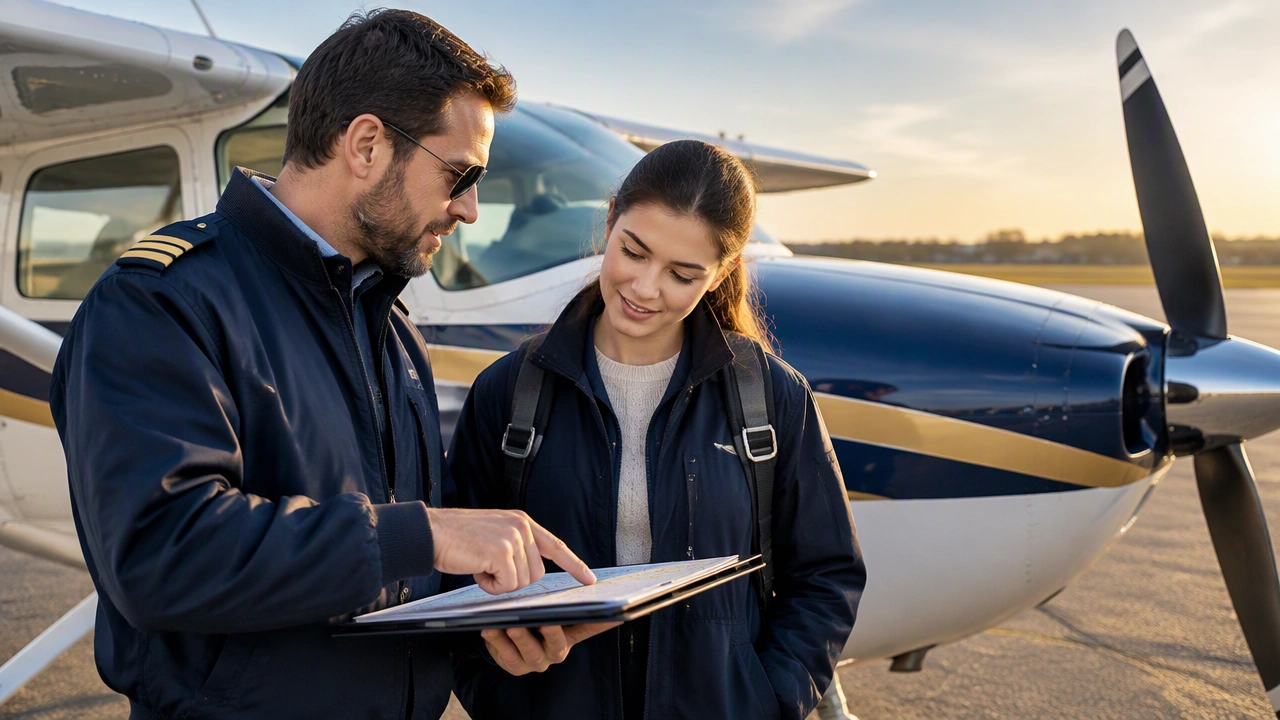
At the flight school, you will meet your instructor and see the training aircraft up close. The instructor will point out the major exterior features: wings, tail, propeller, landing gear, fuel tanks, and inspection openings. You may learn how to check that control surfaces move correctly and that the airframe is free of obvious damage.
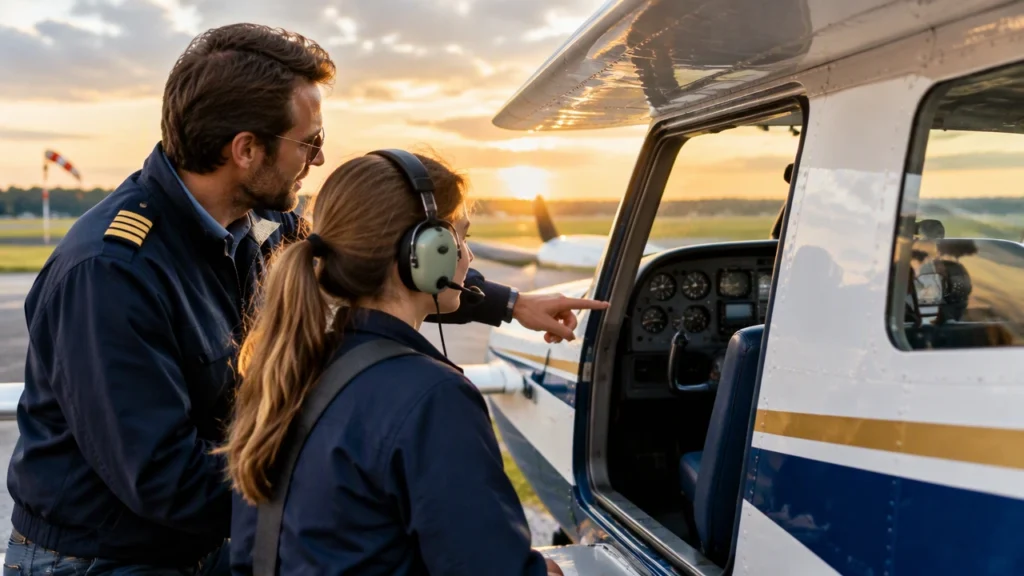
Inside the cockpit, your instructor will identify the seats, rudder pedals, control yoke or stick, throttle, and key instrument groups. The goal is not to memorize every dial in one sitting. It is to understand which information matters most during this first lesson and where to find it.
The Pre-Flight Briefing
Before taxiing, your instructor will explain the lesson objectives in plain language. A first lesson often focuses on four areas:
- Safety and communication: how to use the headset, speak on the radio, and respond to instructor prompts.
- Aircraft control: how pitch, roll, and yaw affect the airplane.
- Airport procedures: how the aircraft moves on the ground and where it will enter the runway.
- Weather and flight plan: wind direction, visibility, nearby traffic, and the route for the lesson.
You will also discuss what happens if something does not go as planned. Instructors expect students to be cautious, not perfect. Your first job is to listen, observe, and ask questions.
Walk-Around and Cockpit Preparation
With your instructor, you will perform a walk-around of the aircraft. This is a practical safety check, not a test you need to pass on day one. You may look for fuel quantity, control freedom, tire condition, and any visible damage. Your instructor will explain why each check matters.
Once inside, you will adjust your seat and pedals so you can reach the controls comfortably. You will fasten the harness, put on the headset, and learn how to communicate with your instructor and air traffic control. The engine start, instrument scan, and radio calls are usually demonstrated first. You may help with simple tasks as your confidence grows.
Taxiing to the Runway
Taxiing can feel surprisingly fast the first time. The aircraft responds to small inputs, and the view from the cockpit is different from the passenger windows you know. Your instructor will steer with you or take over when needed. Pay attention to the centerline, taxiway signs, and other aircraft. The aim is smooth, deliberate movement rather than speed.
At the runway holding point, the instructor will complete final checks and confirm that the runway is clear. You may hear radio phrases that sound unfamiliar. Ask for a simple explanation after the call so you can connect the words to the action.
Takeoff and the First Minutes in the Air
On the runway, the instructor usually demonstrates the takeoff or allows you to participate with close guidance. As speed increases, the airplane will feel different under your hands and feet. The instructor will call out key speeds and make small corrections while you observe the attitude of the aircraft and the horizon.
Once airborne, the flight may seem busy: engine noise, radio traffic, instruments, and changing views all compete for attention. Your instructor will keep the workload manageable. Early exercises may include maintaining a heading, keeping the wings level, or making gentle turns. You will learn how small control inputs create gradual changes.
Handling the Sensations of Flight
Some students feel a light stomach flutter during turns or turbulence. This is common and usually fades as your body learns the rhythm of the aircraft. Breathe normally, look at the horizon when possible, and tell your instructor if you feel uncomfortable. A good instructor will adjust the lesson rather than push through discomfort.
It is also normal to feel mentally tired. Flying requires you to scan instruments, listen to radio calls, and coordinate your hands and feet at the same time. Short lessons are designed with this in mind.
Landing and the Return to the Flight School
The approach and landing are often the most memorable part of the lesson. Your instructor will manage the timing and alignment while explaining what to watch for: airspeed, descent rate, runway centerline, and the flare just above the surface. Even if you do not perform the landing yourself, you will begin to recognize the sequence.
After clearing the runway, you will taxi back, shut down the aircraft, and complete any required paperwork. The instructor will give a debrief that highlights what went well, what to review, and what the next lesson will cover.
How to Make the Most of Your First Lesson
Arrive curious rather than expecting instant mastery. Take brief notes after the flight while the details are fresh. Write down unfamiliar terms, radio phrases, and questions about the controls. Review the lesson with your instructor before leaving if the school offers time for it.
Finally, keep your expectations grounded. A first lesson is an introduction to pilot training, not a performance review. Progress comes from repetition, honest feedback, and gradually taking on more responsibility. Each flight builds on the last, turning unfamiliar procedures into habits you can trust.
By knowing the sequence in advance, you can focus on the experience itself: the feel of the controls, the discipline of the checklist, and the quiet confidence that comes from understanding what happens next.